
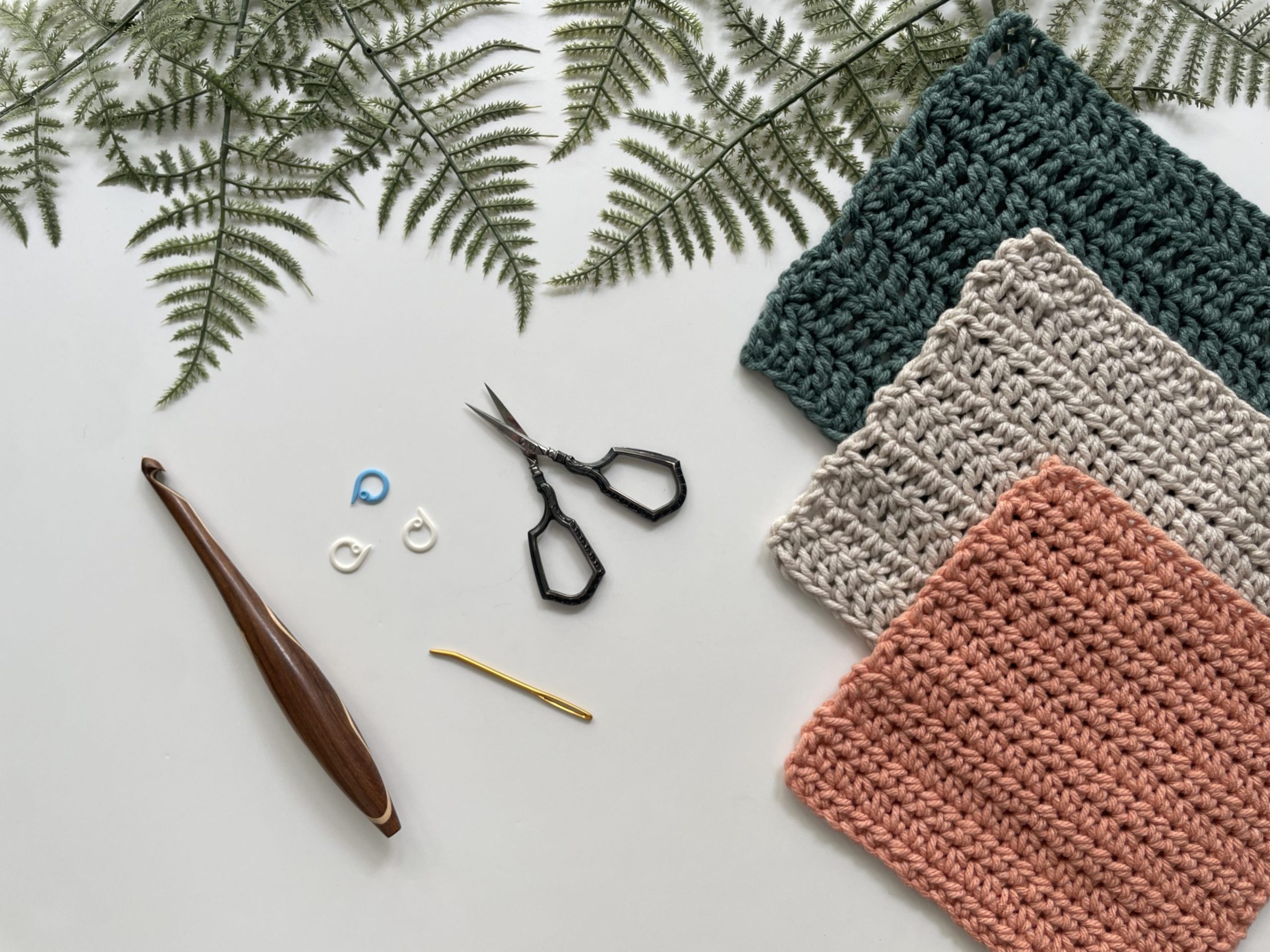
If you’re ready to learn how to crochet, you might be wondering what supplies you actually need. Walk into a craft store or browse online, and you’ll quickly discover hundreds of different hooks, yarns, accessories, and gadgets. It can feel overwhelming before you’ve even made your first stitch.
The good news? You don’t need a room full of supplies to begin – and 2 of them you will have lying around the house already!
LEARN TO crochet
Module 1: Foundations First
Lesson 2: Crochet Supplies for Beginners
This lesson is part of my free Learn to Crochet Course designed to take you from your very first stitch to completing your first projects and beyond.
24 step-by-step lessons with videos.
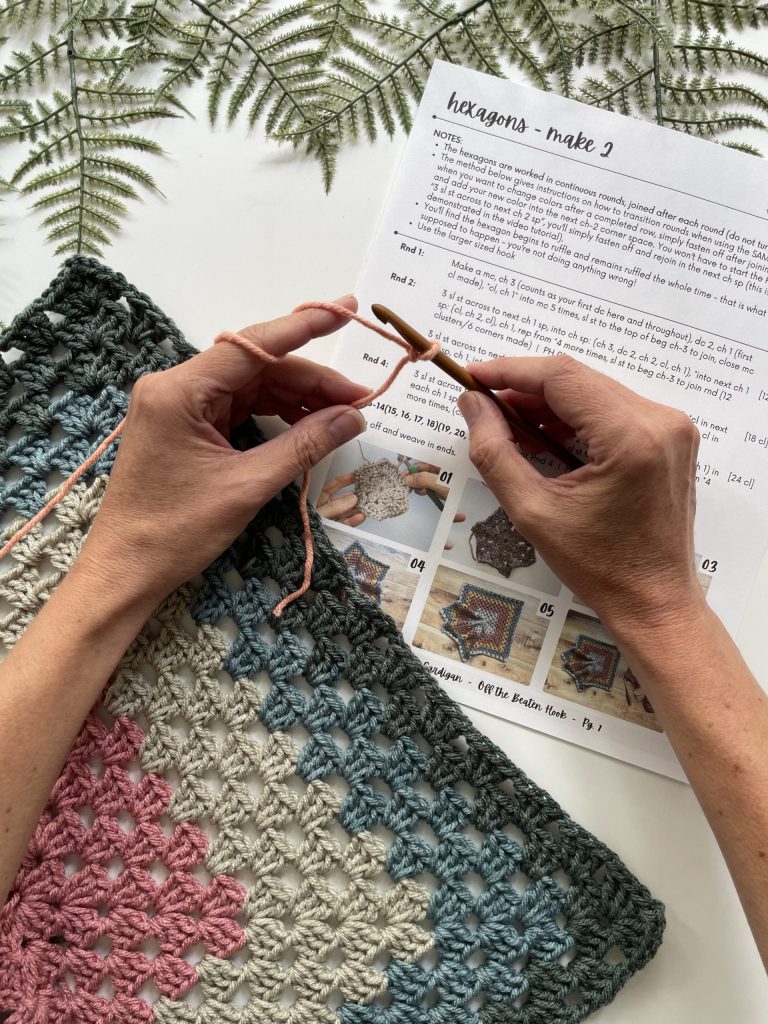

A Little Help for Your Crochet Basket
Join and get the free Crochet Pro Essentials PDF Pack, plus gentle course reminders and new lessons in your inbox.
1. Yarn
Yarn is the foundation of every crochet project, and choosing the right one can make learning much easier.
As a beginner, I recommend starting with a smooth, light-colored worsted weight (#4) yarn. This weight is comfortable to work with, and lighter colors make it much easier to see your stitches while you’re learning.
Try to avoid:
- Fuzzy yarn
- Eyelash yarn
- Very dark colors
- Novelty or textured yarns
These specialty yarns are beautiful, but they can make it difficult to recognize your stitches when you’re just starting out.
Don’t worry too much about finding the “perfect” yarn. Right now, your goal is simply to practice.
We’ll dive much deeper into choosing yarn in the next lesson.
2. Crochet Hook
The crochet hook is the tool you’ll use to create every stitch.
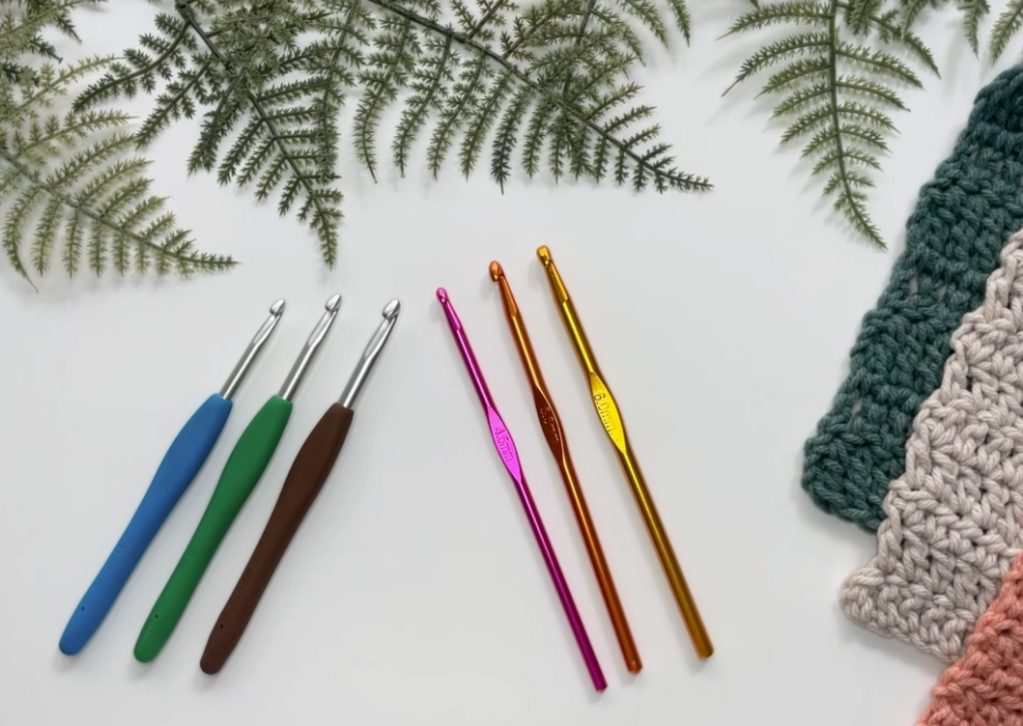
Hooks come in different sizes and materials, including aluminum, bamboo, wood, and plastic. While every crocheter develops personal preferences over time, a crochet hook with an aluminum head is an excellent place to start because it’s affordable, durable, and glides smoothly through yarn.
A hook size 5.0 mm, 5.5 mm or 6.0 mm crochet hook are a great beginner choices.
We’ll explore hook sizes, materials, and how to choose the right hook in an upcoming lesson.
3. Scissors
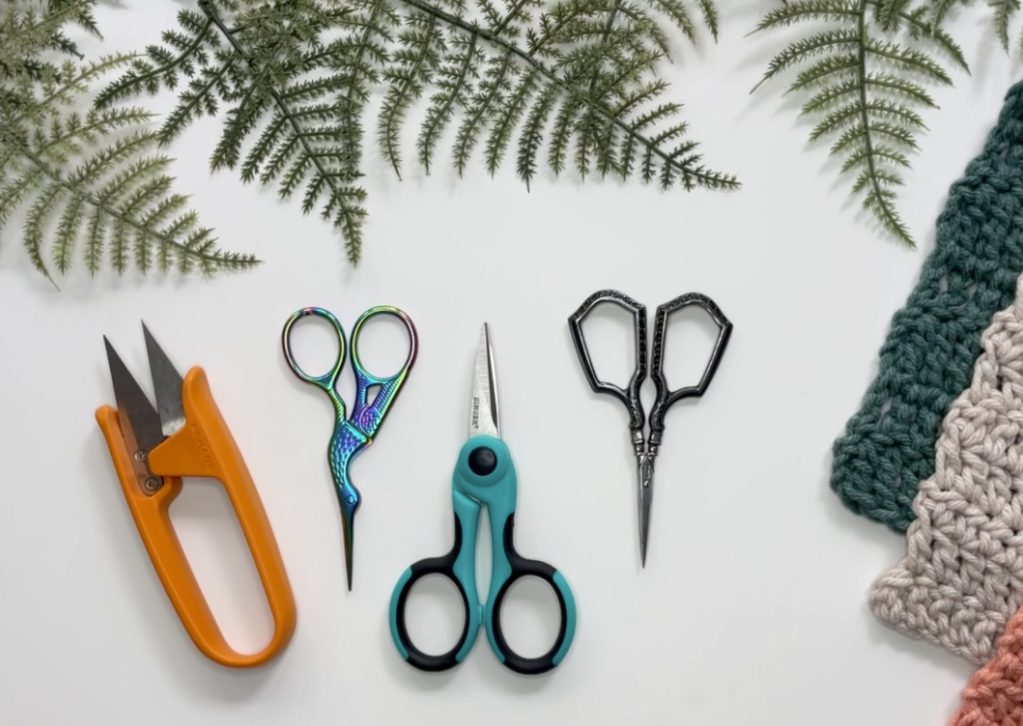
Any scissors will do, but just make sure they’re sharp! I recommend a pair of small scissors that are designed for fiber or sewing. I love these detail scissors by Singer. I also use these Fiskars scissor snips which are amazing and quick because you can just grab them and snip your yarn – you don’t even have to poke your fingers through any holes! Of course, feel free just to start with the scissors you have laying around at home. Any scissor will work, but as you crochet more you will be super thankful for a small, SUPER SHARP pair of scissors.
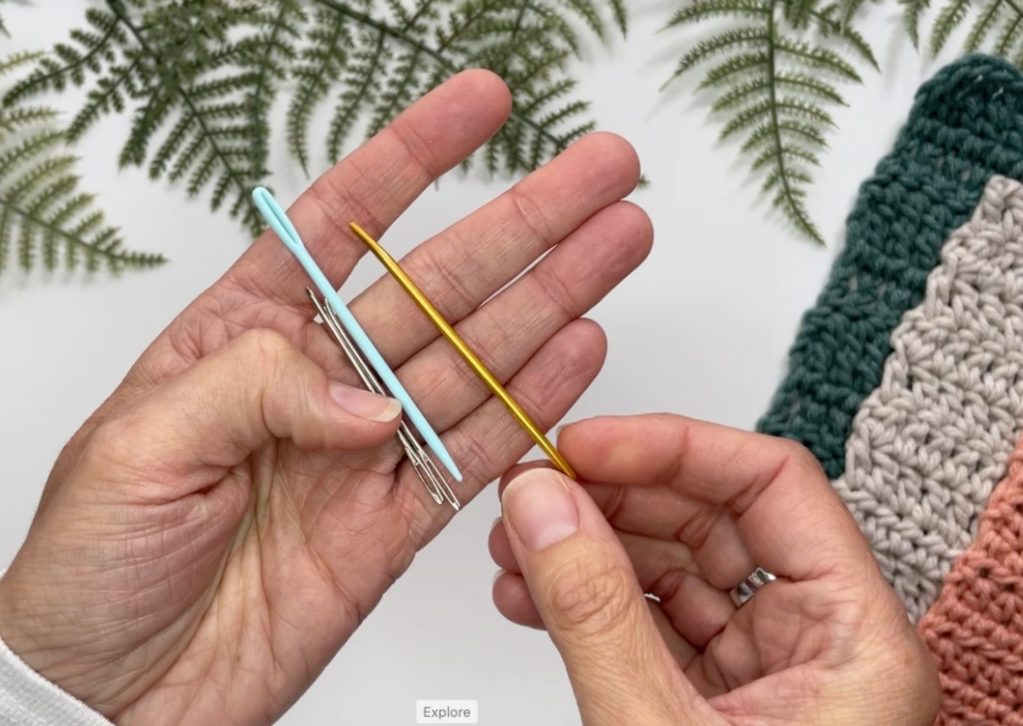
4. Tapestry Needle/Yarn Needle
You will need a tapestry needle for weaving any yarn tails into your project. These needles come in plastic and steel. I like steel because they’re sturdy and don’t bend. These are the ones I use but it really doesn’t matter. A yarn needle is not a standard sewing needle – they are much larger and have a large eye opening for threading yarn through and a blunt tip for weaving easily through your stitches.
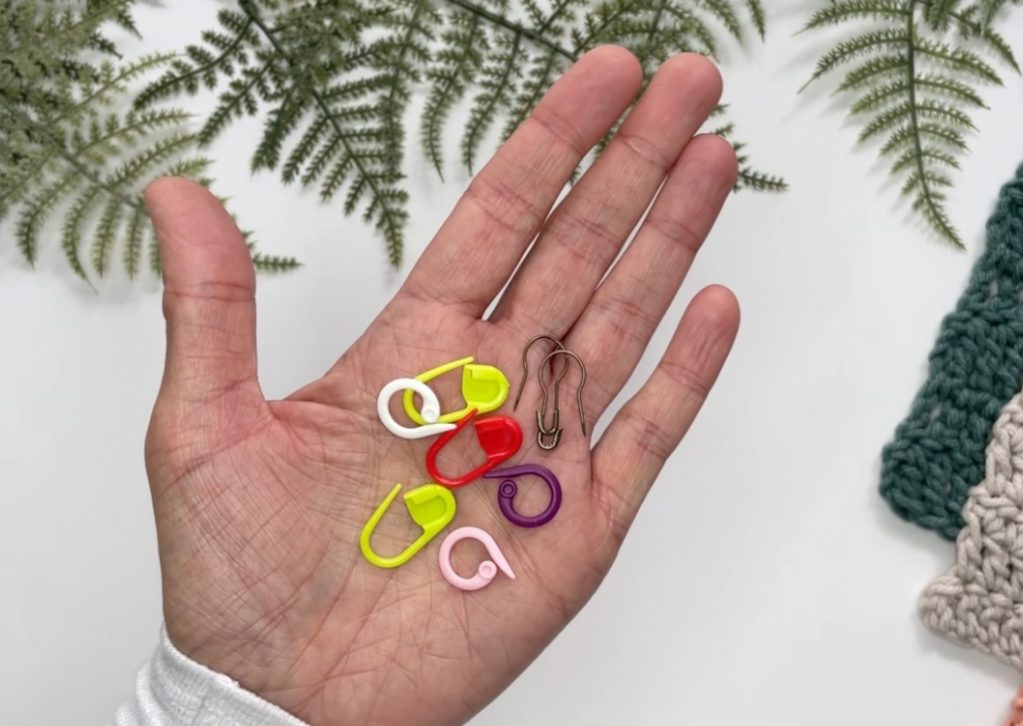
5. Stitch Markers
Finally, the last essential crochet tool is stitch markers! Stitch markers will keep the place you left off at when you set your project down for the day. They will mark the beginning and end of rounds and rows. They will keep your place as you count stitches by tens or twenties or whatnot. You must have stitch markers.
There are two main types of stitch markers: locking and non-locking. If you choose just one to start, I’d recommend the locking style because they’re sure to stay locked onto your stitch.
Stitch markers are one of the two items I referred to as a tool you may have lying around your house because you absolutely don’t have to buy special stitch markers. You can use: safety pins, paper clips, or a small strand of scrap thread that you can thread through your project using your crochet hook.
Watch the Video Lesson
What You Don’t Need
Try not to get sucked into the idea that you need lots of expensive supplies before you can begin.
The truth is, you don’t.
Right now, you can safely skip things like:
- Large hook sets
- Fancy yarn bowls
- Blocking mats
- Tension rings
- Project bags
- Row counters
- Expensive specialty tools
Those accessories can be fun additions later, but they’re not necessary for learning the basics.
Focus on building your skills first. As you crochet more projects, you’ll naturally discover which tools are worth adding to your collection.
Keep It Simple
One of the things I love most about crochet is how accessible it is.
With just a handful of affordable supplies, you can begin creating gifts, home décor, clothing, stuffed animals, blankets, and so much more.
Don’t feel like you need to buy everything all at once. Every experienced crocheter started exactly where you are now—with one hook, one ball of yarn, and a willingness to learn.
Progress over perfection applies to your supplies, too.
Start simple, enjoy the process, and let your collection grow alongside your skills.
Beginner Tip
You don’t have to buy everything today. A ball of yarn, one crochet hook, some scissors, a yarn needle and a willingness to practice are enough to begin. You can always grow your toolkit as your confidence grows.
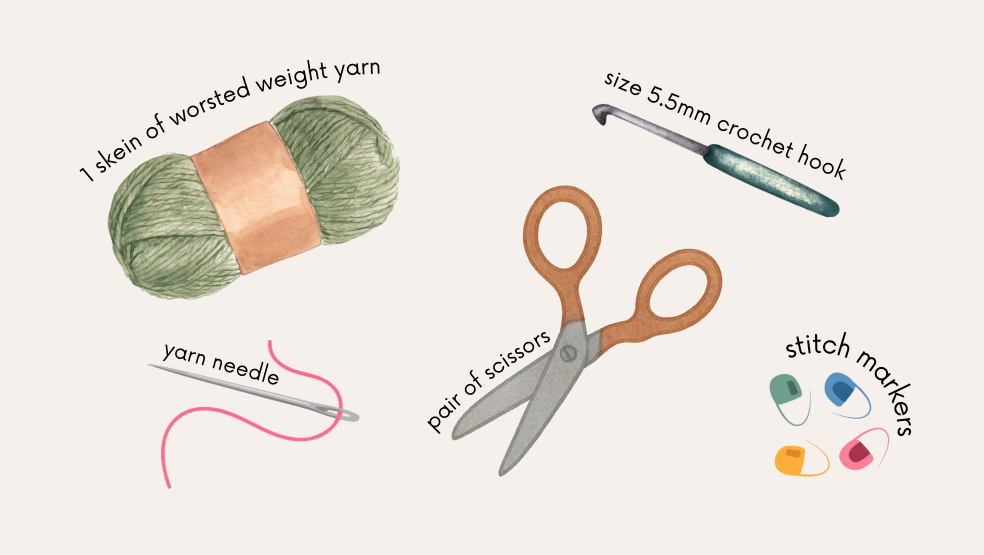
Your Shopping List
The options are endless, so you have lots of choices, but this quick shopping list will point you in the right direction for what you’ll need to start.
FAQs
Not at all! One of the best things about crochet is that it’s an inexpensive hobby to begin. A ball of yarn, a crochet hook, a pair of scissors, a tapestry needle, and a stitch marker are all you need to start learning. As your skills grow, you can gradually add more tools to your collection—but there’s no need to buy everything at once.
A smooth, light-colored worsted weight (#4) yarn is one of the best choices for beginners. It’s easy to see your stitches, comfortable to work with, and widely available. Avoid fuzzy, textured, or very dark yarns until you’re more familiar with the basic stitches.
If you’re using worsted weight (#4) yarn, a 5.5 mm crochet hook is a great place to start. It’s one of the most common hook sizes for beginners and works well for practicing the basic crochet stitches.
While you can crochet without stitch markers, they make learning much easier. Stitch markers help you keep track of your stitches, mark the beginning of rounds, and avoid common counting mistakes. If you don’t have stitch markers yet, a small safety pin or even a scrap piece of yarn works just as well.
Yes! A regular pair of sharp scissors is perfect for cutting yarn. However, when it comes to weaving in your yarn ends, you’ll want to use a tapestry needle instead of a sewing needle. Tapestry needles have a large eye for yarn and a blunt tip that slides safely between your crochet stitches.
Probably—but not right away! As you try new projects, you may discover tools that make crocheting more enjoyable, like additional hook sizes, blocking mats, yarn bowls, or project bags. There’s no rush to build a large collection. Start with the essentials, enjoy the learning process, and let your crochet toolkit grow naturally over time.

What’s Next?
Now that you know what supplies you’ll need, it’s time to take a closer look at the most important one: yarn.
In the next lesson, we’ll explore the different yarn weights, fibers, and textures so you can confidently choose the best yarn for your first crochet projects.
← Previous Lesson: What is Crochet
SOCIAL MEDIA YOUR THING?
Connect with me on your favorite social network!
Pin This Lesson for Later

Leave a Reply