
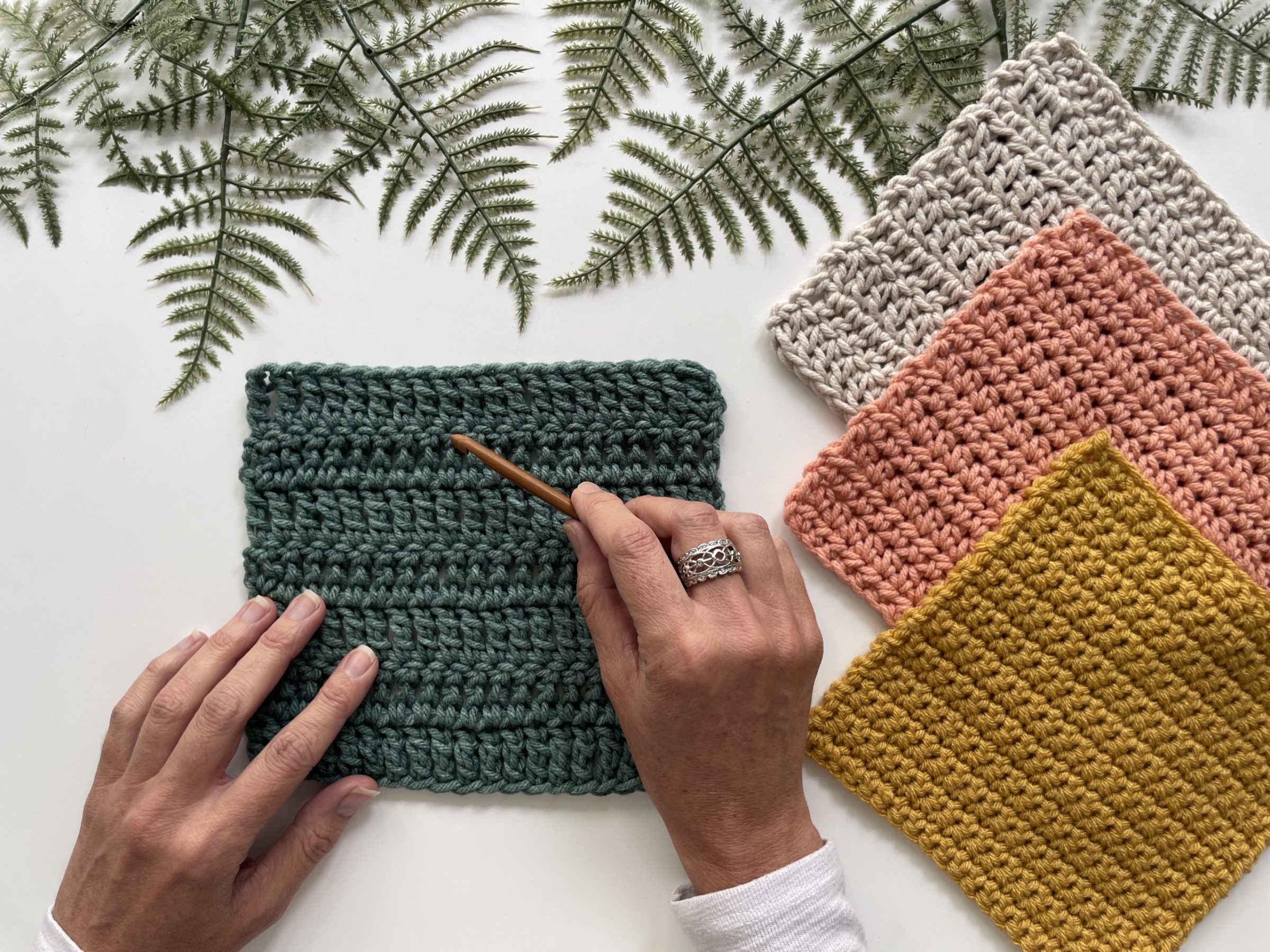
Learning how to treble crochet adds a tall, airy stitch to your growing crochet toolbox. Treble crochet works up quickly, creates a flexible fabric, and gives you plenty of height without requiring an unreasonable number of stitches—which is always a welcome development.
In this beginner-friendly lesson, I’ll show you how to make a US treble crochet stitch step by step, how to begin and end each row, and how to keep your stitch count and edges under control. Grab your hook and yarn, and let’s add one more foundational stitch to your repertoire.
LEARN TO crochet
Module 2: Core Crochet Stitches
Lesson 5: How to Treble Crochet
This lesson is part of my free Learn to Crochet Course designed to take you from your very first stitch to completing your first projects and beyond.
24 step-by-step lessons with videos.
Materials You Will Need For This Lesson
- Worsted (4/Medium) Weight Yarn
- 5.5 mm Crochet Hook (a size 5.0 mm or 6.0 mm will work, if preferred)
- Scissors
- Yarn Needle
- Stitch Markers
A Little Help for Your Crochet Basket
Join and get the free Crochet Pro Essentials PDF Pack, plus gentle course reminders and new lessons in your inbox.
What Is a Treble Crochet Stitch?
Treble crochet is one of the basic crochet stitches and is abbreviated tr in US crochet patterns. It is taller than single crochet, half double crochet, and double crochet.
To make a treble crochet, you’ll yarn over twice before inserting your hook. You’ll then pull the yarn through two loops at a time until only one loop remains on your hook.
Because this stitch is so tall, it creates a fabric that is:
- Lightweight and flexible
- More open than shorter crochet stitches
- Quick to work up
- Great for adding height, drape, and texture
If single crochet is the sturdy, sensible member of the crochet family, treble crochet is the tall one who makes an entrance.
US Treble Crochet vs. UK Treble Crochet
This lesson uses US crochet terminology.
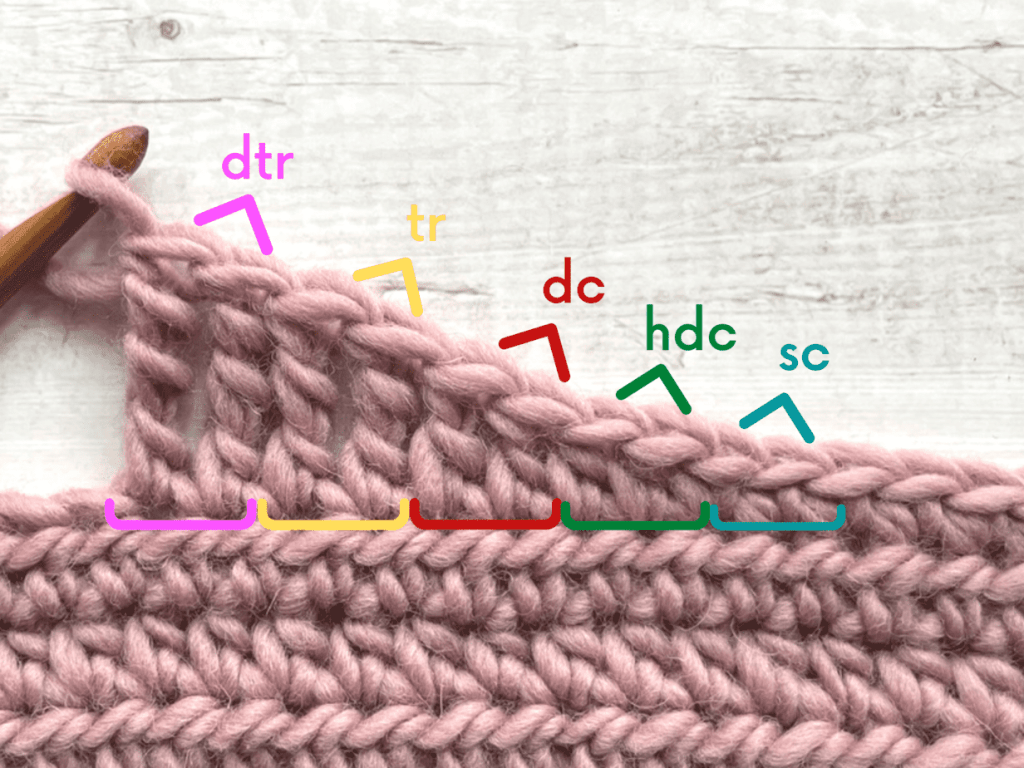
In US terms, the stitch we’re learning is called a treble crochet and is abbreviated tr. In UK terminology, the same stitch is called a double treble crochet and is abbreviated dtr.
To make things slightly more confusing—because apparently yarn wasn’t enough—the UK treble crochet is the same stitch as the US double crochet. Always check which terminology your pattern uses before beginning.
Treble Crochet Stitch Height:
The tr stitch is the tallest of the “basic” crochet stitches, which include single crochet, half double crochet, double crochet and treble crochet. To compare:
Treble Crochet Fabric Characteristics:
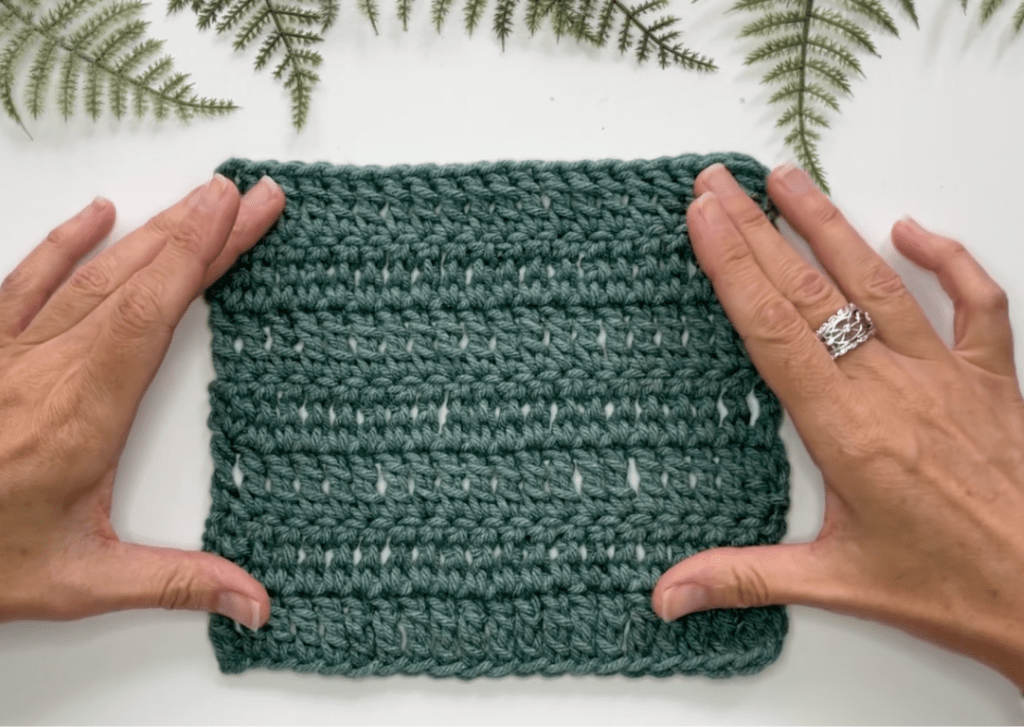
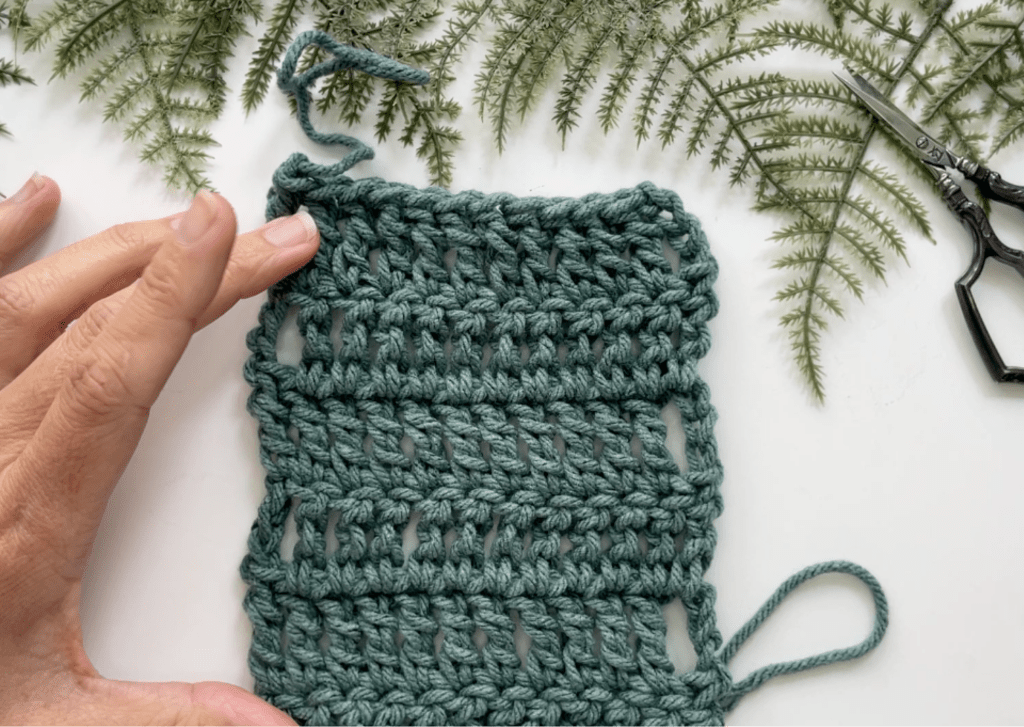
- Compared to the dense fabric created with a single crochet, the tr provides ample flexibility and drape because the posts are super tall.
- It will create a fabric that has a a lot of breathability – just look at those gaps between stitches!
- It will build your fabric quite quickly because it is a really tall stitch.
What Can You Make With Treble Crochet?
Treble crochet can be used in many different projects, including:
- Shawls and wraps
- Lightweight scarves
- Open cardigans
- Market bags
- Blankets
- Lacy stitch patterns
- Decorative borders
- Garments that need extra drape
It is also commonly combined with chains and shorter stitches to create shells, fans, lace, and other textured crochet patterns.
How to Treble Crochet Step by Step
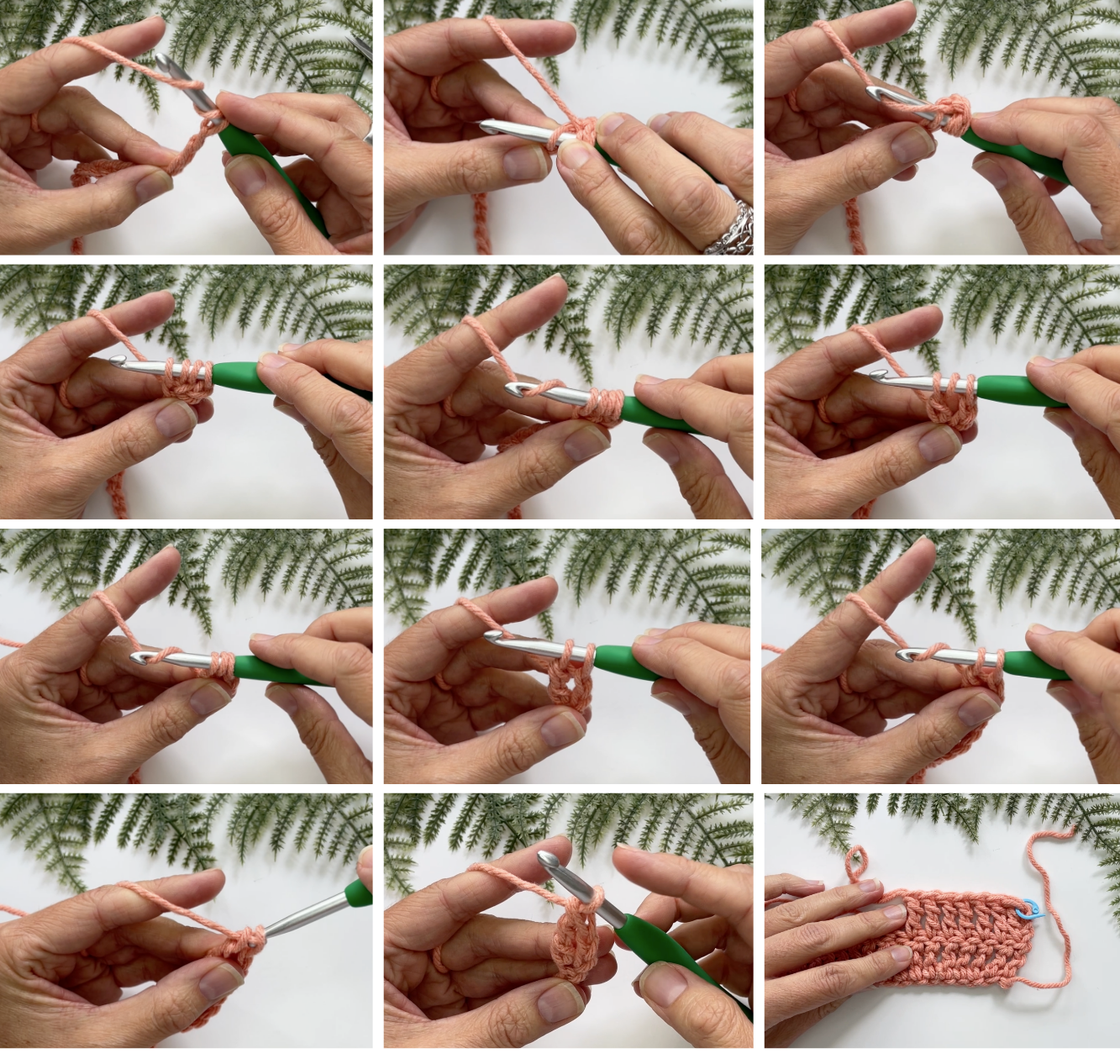
The tr stitch is made with these simple steps (photos below):
- Yarn over hook twice
- Insert your hook into the next stitch
- Yarn over and pull up a loop (you now have 4 loops on your hook)
- Yarn over again and pull through 2 loops on your hook (you now have 3 loops on your hook)
- Yarn over again and pull through 2 loops on your hook (you now have 2 loops on your hook)
- Yarn over again and pull through the final 2 loops on your hook
How to Treble Crochet into a Foundation Chain
Before beginning, make a foundation chain. For our practice swatch, you’ll chain 22 and work your first tr into the third chain from the hook.
The two skipped chains create the height needed at the beginning of the row. For this lesson, they will not count as a stitch.
Here’s how to treble crochet:
- Yarn over twice.
Wrap the yarn over your hook two times. You should have three loops on your hook before inserting it into the chain. - Insert your hook into the third chain from the hook.
The loop currently on your hook does not count as a chain. - Yarn over and pull up a loop.
You should now have four loops on your hook. - Yarn over and pull through the first two loops.
You will have three loops remaining on your hook. - Yarn over and pull through the next two loops.
You will have two loops remaining on your hook. - Yarn over and pull through the final two loops.
You should now have one loop left on your hook.
That completes one tr stitch.
To make the next stitch, yarn over twice and insert your hook into the next chain. Continue working one tr into each chain across.
The basic rhythm is:
Yarn over twice, insert, pull up a loop, then pull through two loops three times.
It may feel like a lot of steps at first, but the movement becomes surprisingly rhythmic once your hands get used to it
How to Work the Second Row of Treble Crochet
Once you’ve completed your first row, chain 2 and turn your work. Because the turning chain does not count as a stitch in this practice swatch, you’ll work your first tr into the very first stitch.
1.Yarn over hook TWICE from back to front:

2. Insert the hook into the next stitch
3. Yarn over and pull up a loop (you now have 4 loops on your hook)
4. Yarn over again and pull through 2 loops on your hook (you now have 3 loops left on the hook)
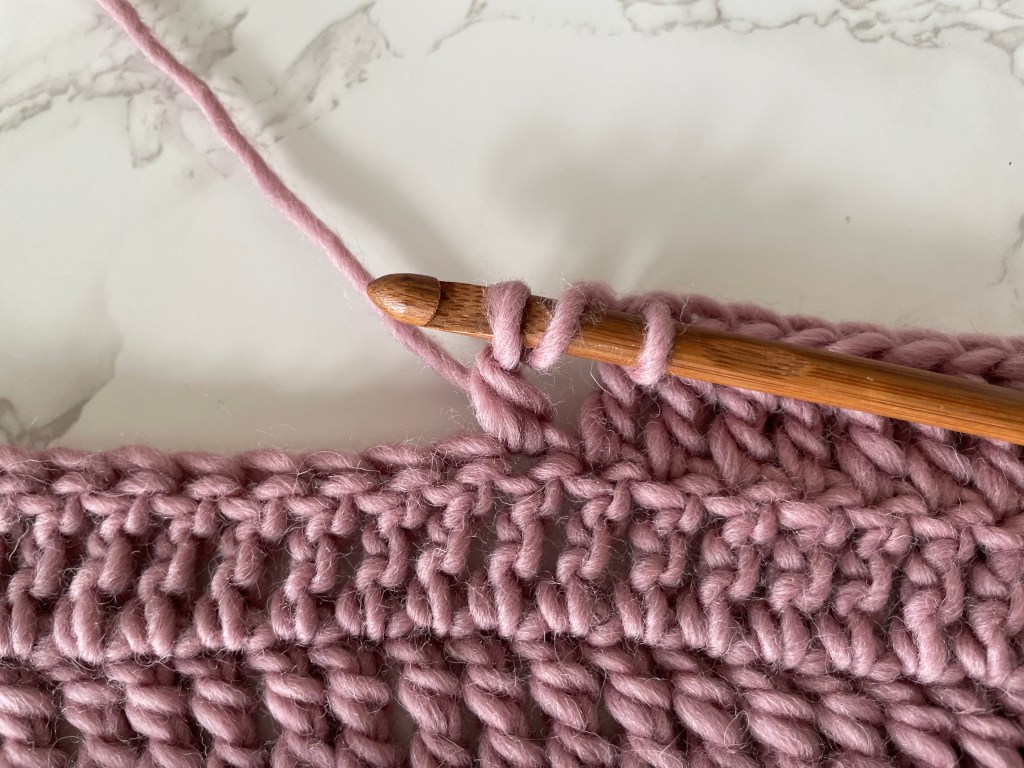
5. Yarn over again and pull through 2 loops on the hook (you now have 2 loops left on the hook)

6. Yarn over again and pull through the final 2 loops on the hook
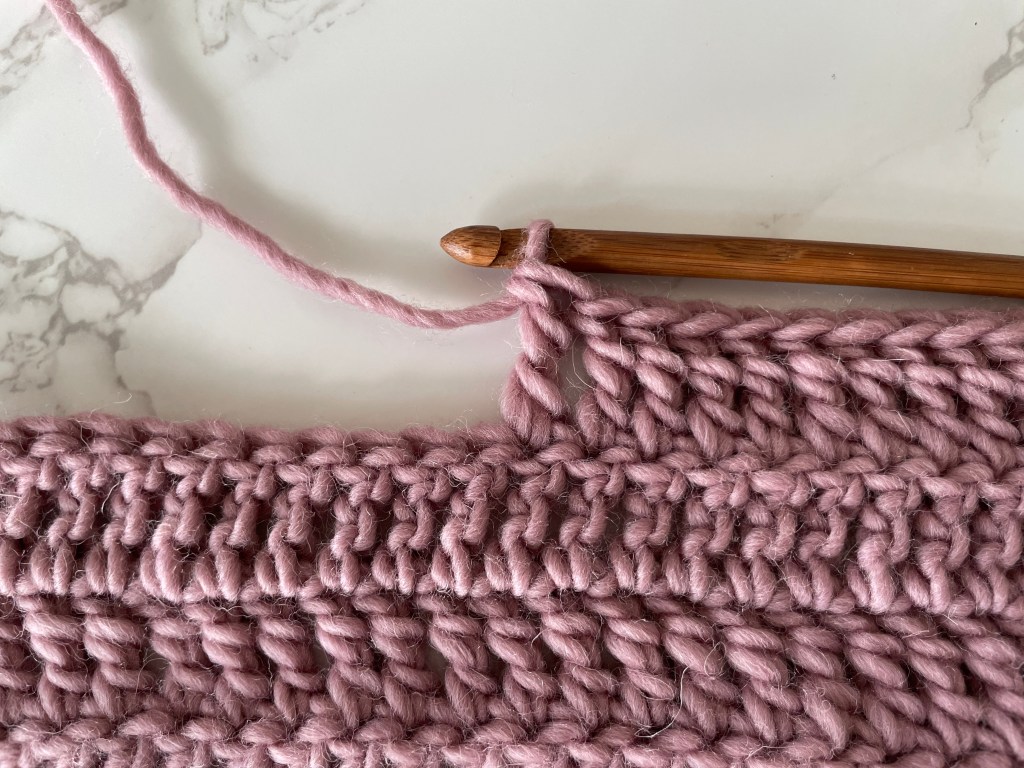
How To Treble Crochet Video Lesson
How to Recognize a Treble Crochet (Stitch Anatomy)
When you look at the top of your work, each treble crochet stitch has two loops that form a small V.
Unless a pattern tells you otherwise, insert your hook underneath both loops of that V.
The tall vertical section below the V is called the post of the stitch. Tr stitches have noticeably taller posts than single or half double crochet stitches, making them fairly easy to recognize once you know what you’re looking for.
When you reach the end of a row, pause and check that you haven’t skipped the final stitch. The last stitch can lean toward the edge and hide beside the turning chain like it has somewhere else to be.
Front Loop Only
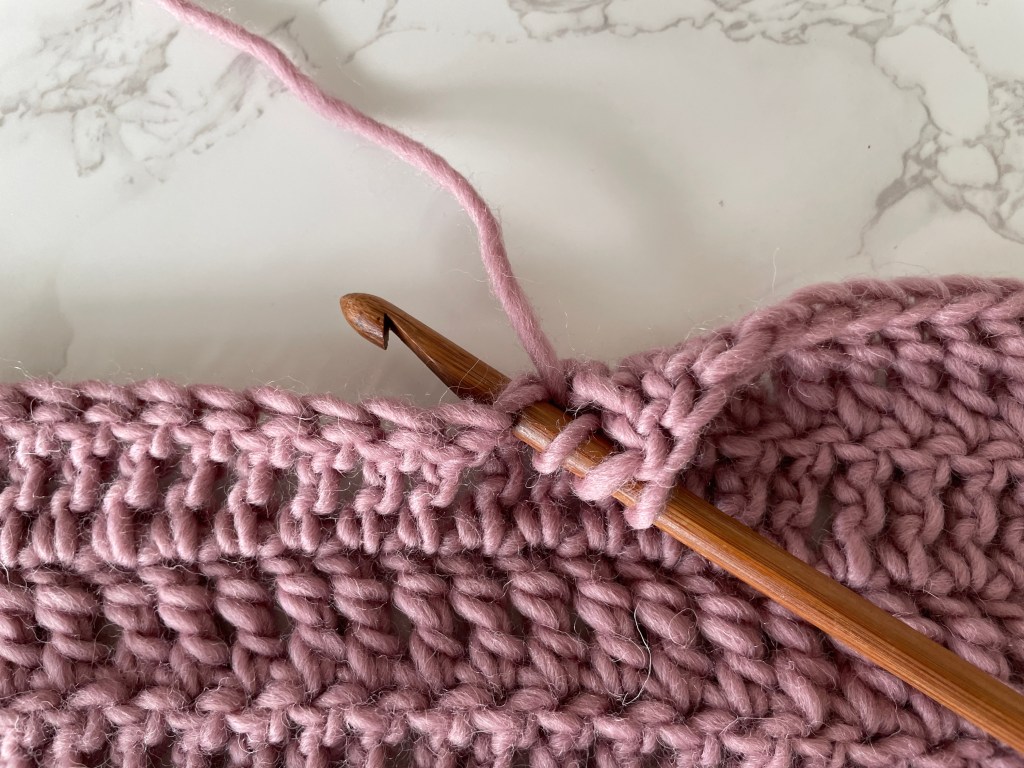
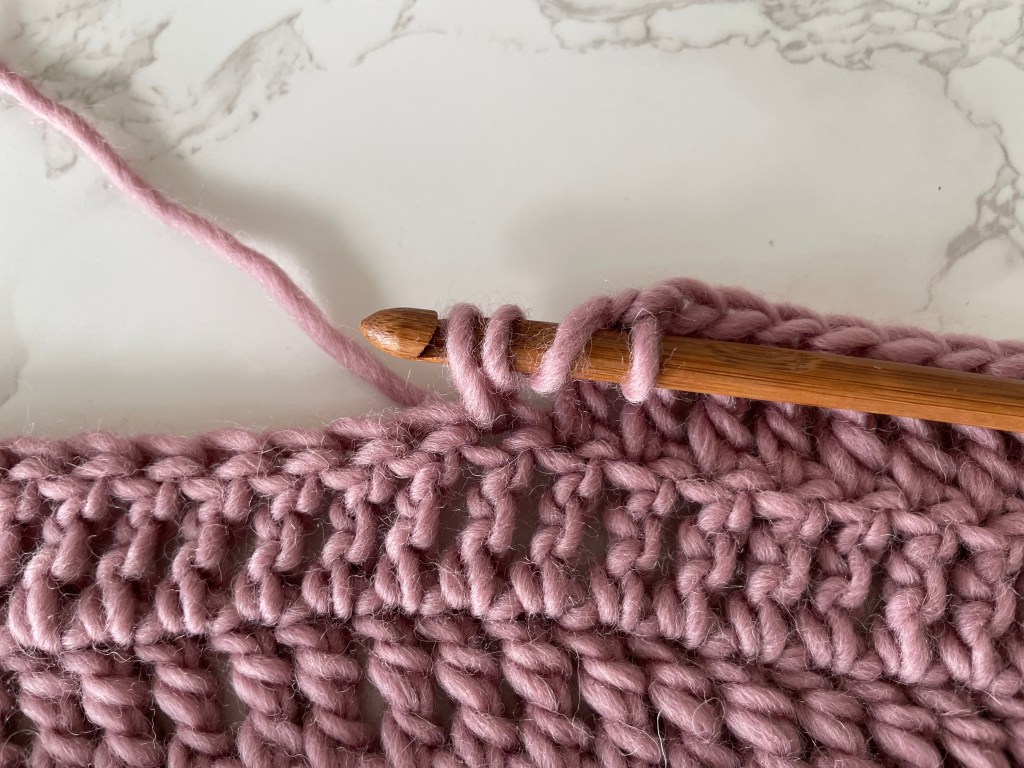
When reading a crochet pattern that calls for working in the front loop only, the abbreviation you will see for TREBLE CROCHET FRONT LOOP ONLY IS: TR FLO or FLO TR. Here is how it looks when you crochet under the front loop only:
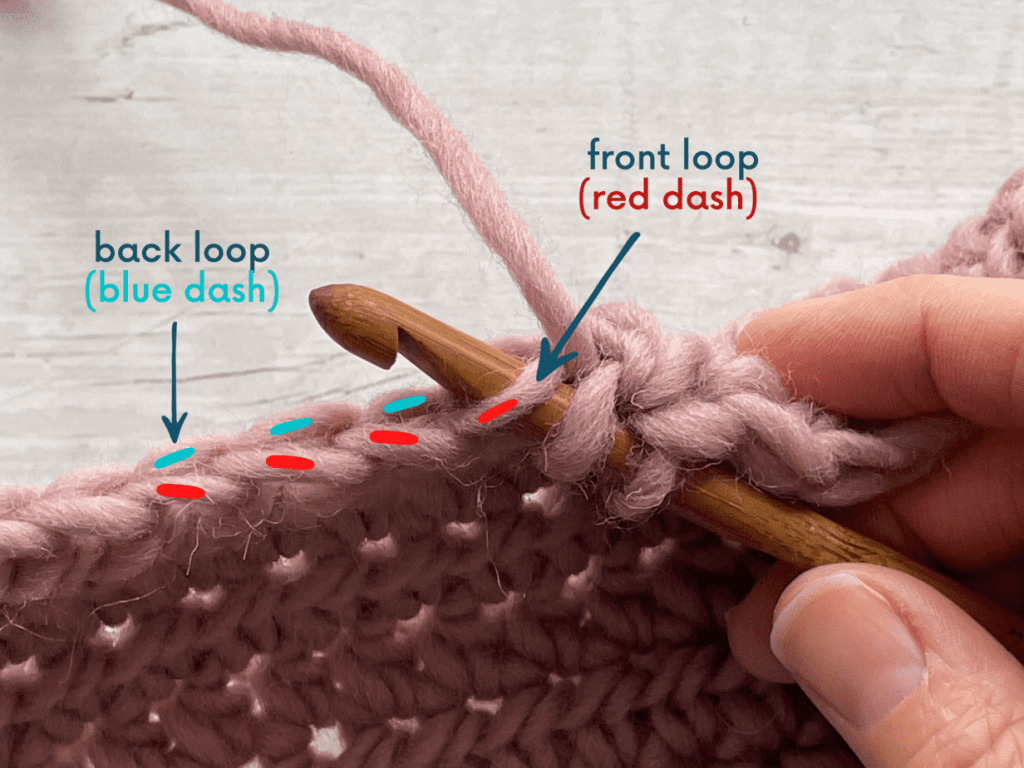
Back Loop Only
When reading a crochet pattern that calls for working in the back loop only, the abbreviation you will see for TREBLE CROCHET BACK LOOP ONLY IS: TR BLO OR BLO TR. Here is how it looks when you crochet under the back loop only:

Treble Crochet Post Stitch
Another common stitch you’ll find with the tr is the post stitch. This is where you make your stitch around the post of the stitch (below the front/back loop), versus under the two loops we just discussed. This is a really fun use of the this stitch because you can create interesting textures and even illusions of shapes in your fabric.
This is what it looks like to make your stitch around the post:
Front Post Treble Crochet (FPtr):
With a FPtr, you insert your hook from front to back and then around the stitch from back to front like this:
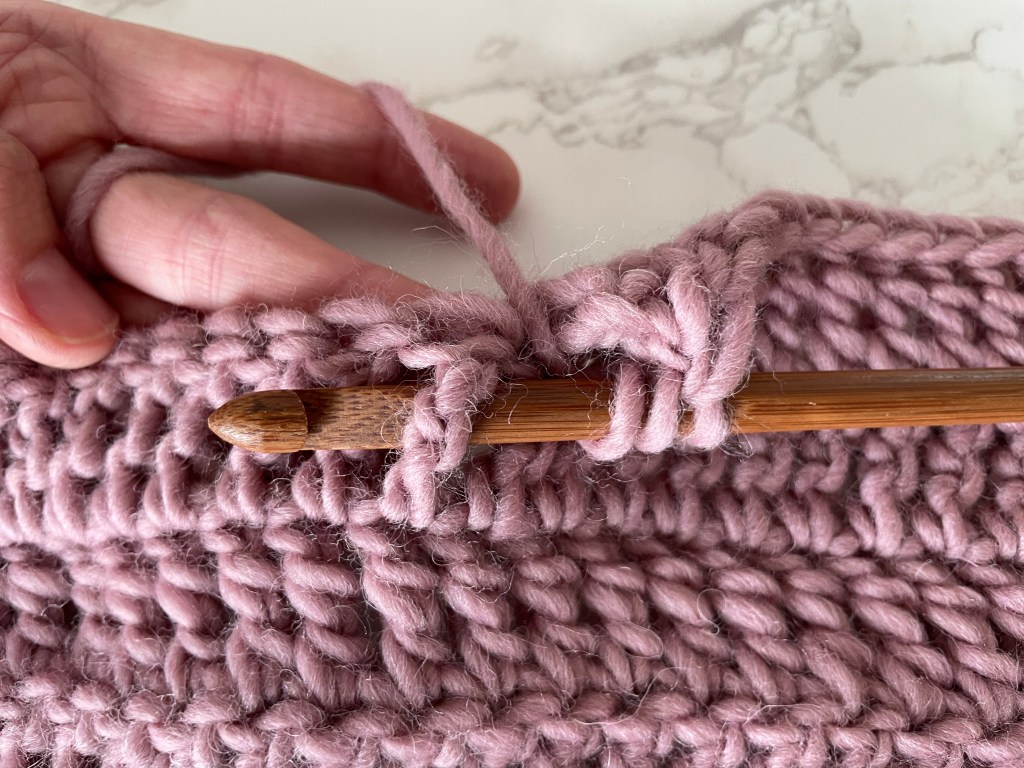
Back Post Treble Crochet (BPtr):
With a BPtr, you insert your hook from the back to the front, around the front of the post and to the back again, like this:

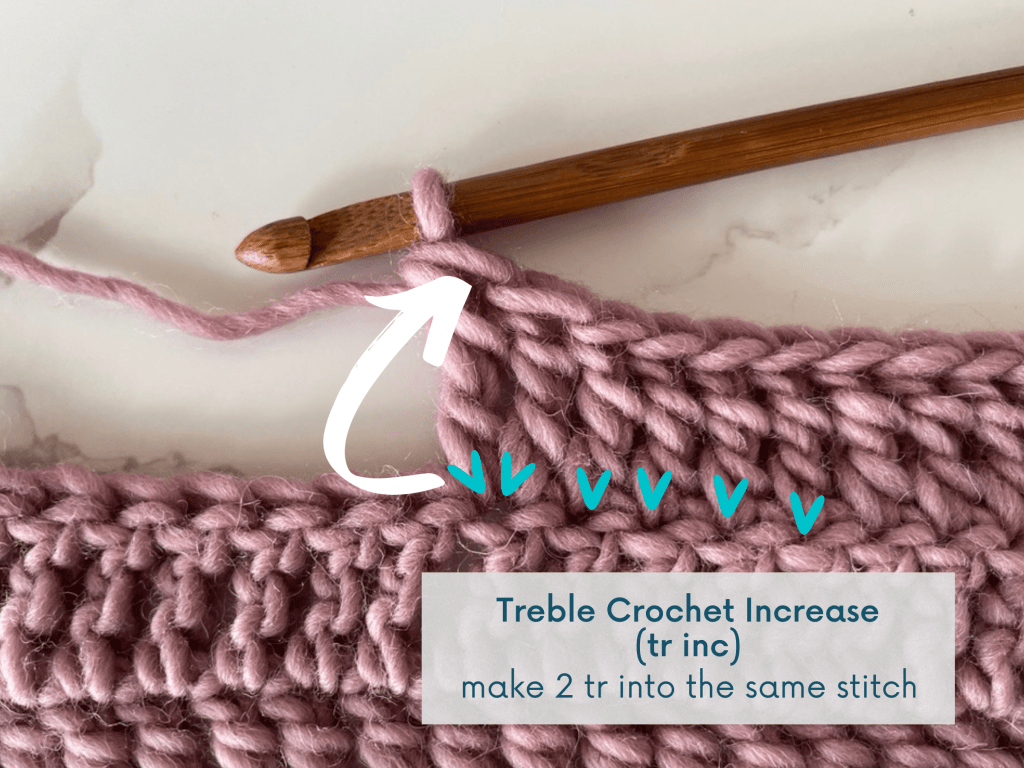
Treble Crochet Increase
A treble crochet increase is when you make more than one tr into the same stitch. You can make 2, 3 or more tr into the same stitch too! In a pattern, the tr increase will be abbreviated tr inc.
- Yarn over hook twice
- Insert your hook into the next stitch
- Yarn over and pull up a loop (you now have 4 loops on your hook)
- Yarn over again and pull through 2 loops on your hook (you now have 3 loops on your hook)
- Yarn over again and pull through 2 loops on your hook (you now have 2 loops on your hook)
- Yarn over again and pull through the final 2 loops on your hook
- Repeat steps 1-4 into the same stitch for as many times as required
Treble Crochet Decrease
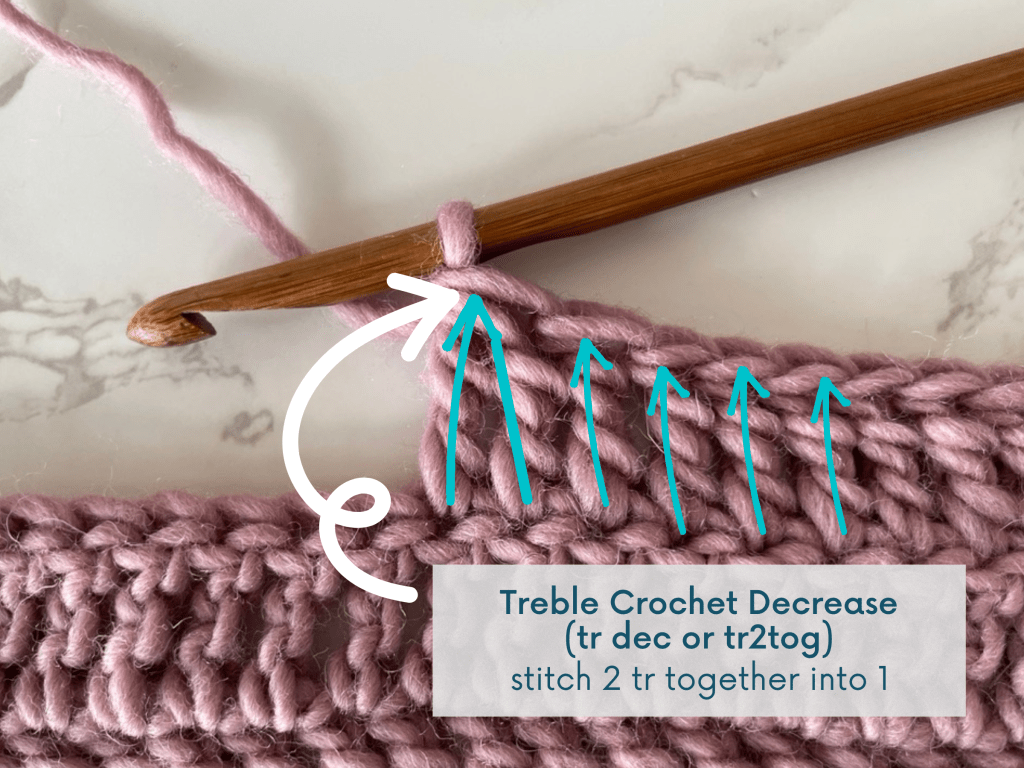
A treble crochet decrease is when you stitch 2 (or more) tr stitches together into one. In a pattern, the tr decrease will be abbreviated tr dec or tr2tog which stands for “treble crochet 2 together”. Here’s how you do it:
- Yarn over hook twice
- Insert your hook into the next stitch
- Yarn over and pull up a loop (you now have 4 loops on your hook)
- Yarn over and pull through 2 (you now have 3 loops on your hook)
- Yarn over and pull through 2 (you now have 2 loops on your hook)
- Yarn over hook twice
- Insert your hook into the next st
- Yarn over and pull up a loop (you now have 5 loops on your hook)
- Yarn over and pull through 2 (you now have 4 loops on your hook)
- Yarn over and pull through 2 (you now have 3 loops on your hook)
- Yarn over and pull through 3
What About the TR Turning Chain?
A turning chain is a number of chain stitches that you make at the beginning of a row to ensure your next row is brought up to the correct height to match the height of the stitch you are making. This creates a straight edge. There multiple ways to treat a turning chain for tr. It is important to know the difference here because sometimes they count as a stitch and sometimes they don’t.
So, let’s talk about this.
Ultimately, if you’re following a pattern, you’ll want to follow what the designer instructs on how to treat the turning chain.
If your tr turning chain uses 4 chains, the turning chain DOES count as a stitch. You will then skip the first stitch of the row (referred to as a “false stitch”) and make your next tr of the row in the next st. If your tr turning chain uses any less than 4 chains do not count it as a stitch (UNLESS your pattern specifically states that it does count). In the case that the turning chain does NOT count, you will make your first tr of the row in the very first stitch.
When your turning chain counts, when you come to the end of the row you will make your final tr of the row into the top of the turning chain. It can be helpful to mark the top of your turning chain so you don’t miss it as you go along!
How to Count Treble Crochet Stitches
Each treble crochet stitch has:
- One tall vertical post
- One “V” at the top
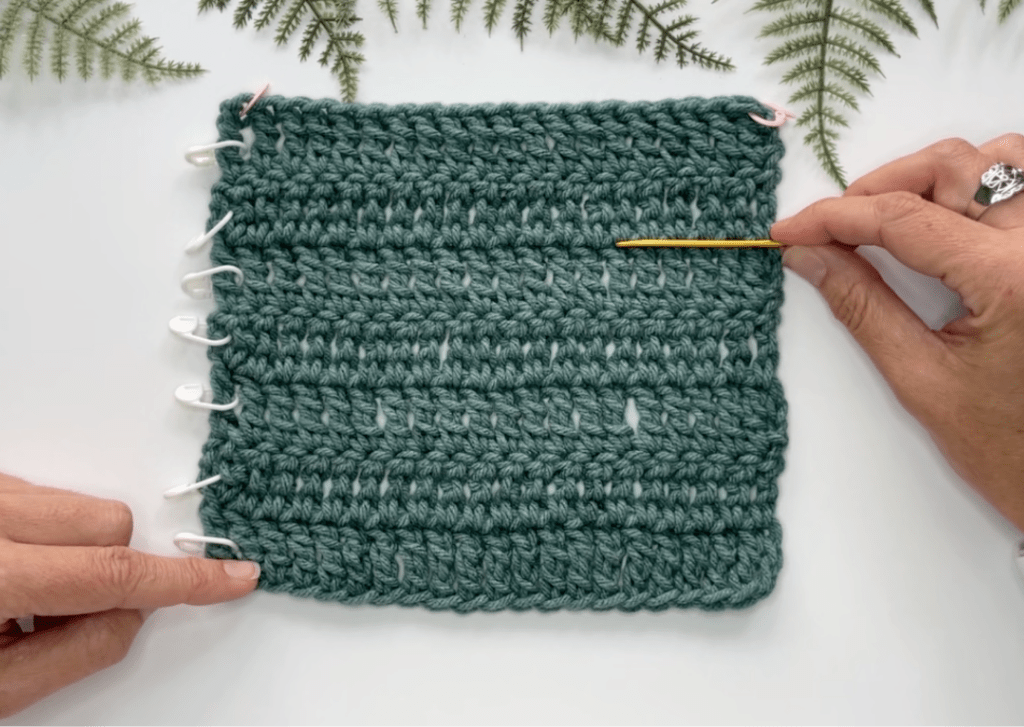
To count the stitches in a row, count the “V” shapes running across the top of your work. Each “V” represents one tr stitch.
Because the chain two does not count as a stitch in this lesson, do not include it when counting your row.
Your final stitch can sometimes lean toward the side and be harder to spot. Gently stretch the fabric and look for the last “V” before the turning chain. Using a stitch marker in the first and last stitch can make this much easier while you practice.
Treble Crochet Compared to Other Basic Stitches
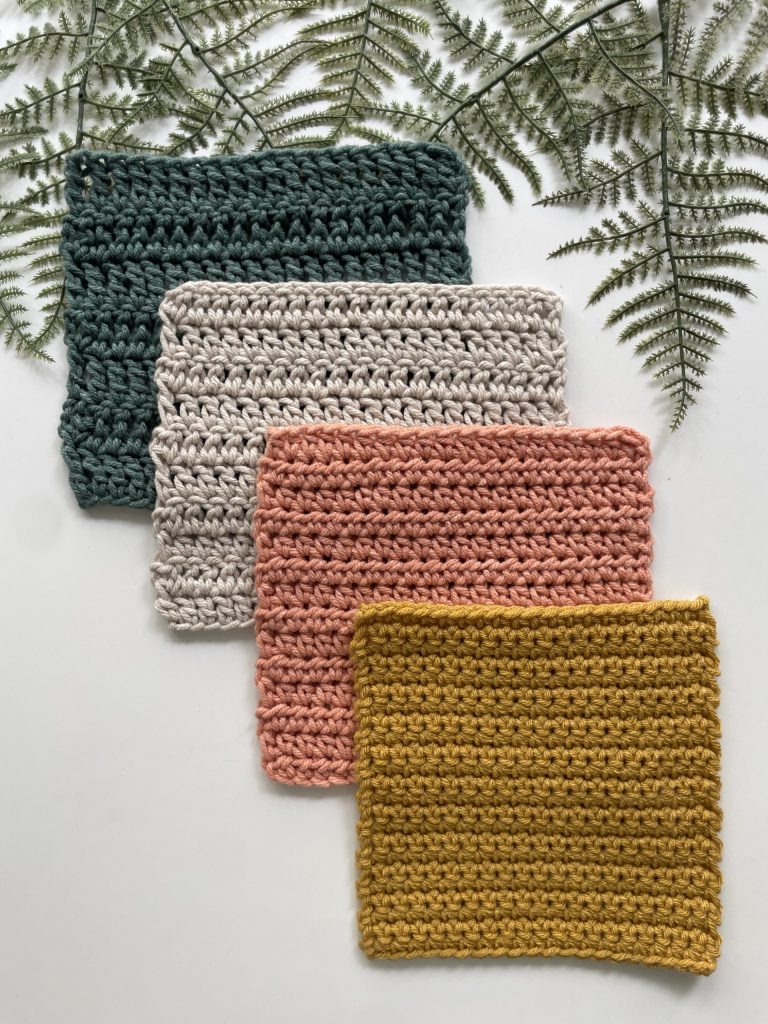
You’ve now learned four foundational crochet stitches. Here’s how they compare:
- Single crochet: Short, dense, and sturdy
- Half double crochet: Slightly taller with a soft, flexible texture
- Double crochet: Taller and more open
- Treble crochet: The tallest and most open of the four
As stitches become taller, the finished fabric generally becomes more flexible and works up more quickly. Taller stitches also create more visible space between the posts.
Tr is especially useful when you want drape, movement, or a more open texture without using a complicated stitch pattern.
How to Keep Your Stitches Even
Tall stitches can take a little practice to keep even. These tips will help:
- Keep your yarn overs relaxed rather than pulling them tightly around the hook.
- Pull each loop up to a consistent height.
- Move through the stitch slowly until the sequence feels natural.
- Count your stitches at the end of every row.
- Place stitch markers in the first and last stitch.
- Make sure you complete all three pull-throughs before beginning the next stitch.
Try not to pull the final loop of each step too tightly. The stitches need enough room for your hook to move smoothly through the loops.
Common TR Mistakes
Starting with only one yarn over:
A tr begins with two yarn overs. If you begin with only one, you’ll make a double crochet instead.
Pulling through too many loops:
After pulling up a loop, yarn over and pull through two loops at a time. Repeat this three times.
Skipping the first stitch:
The first stitch can be easy to overlook after turning your work. Since the chain two does not count as a stitch in this lesson, work your first treble into the first stitch.
Missing the last stitch:
The final stitch may lean toward the edge of your work. Count the “V” shapes across the top and use a stitch marker if needed.
Adding an extra stitch:
Avoid working into the turning chain at the end of the row. It does not count as a stitch in this swatch.
Making loose loops:
Treble crochet naturally has more room to stretch because of its height. Aim for relaxed, consistent loops without allowing them to become excessively loose.
Why Are My Treble Crochet Edges Uneven?
Uneven edges usually happen when stitches are added or skipped at the beginning or end of a row.
To keep your edges straight:
- Count 20 stitches in every row.
- Mark the first and last stitch.
- Work into the first stitch after turning.
- Do not work into the turning chain.
- Look for the final “V” at the end of the row before stopping.
Treble crochet edges may look slightly more open than the edges of shorter stitches. That is normal. The goal is to maintain the same stitch count and placement in every row.

Why Is My TR So Loose?
Treble crochet uses more yarn overs and has a taller post, so it naturally feels looser than single or half double crochet.
If your stitches seem excessively loose:
- Keep both yarn overs close to the hook.
- Avoid lifting the hook too high when pulling up a loop.
- Maintain steady yarn tension.
- Use the widest part of the hook shaft to size each loop consistently.
Don’t pull everything painfully tight in an attempt to control the stitch. Your hook still needs enough room to move through the loops. We’re making fabric, not testing the yarn’s structural limits.
FAQs
A US treble crochet begins with two yarn overs before you insert the hook into the stitch. After pulling up a loop, you’ll have four loops on your hook. Yarn over and pull through two loops three times to complete the stitch.
In this tutorial, we use a chain-two turning chain. The chain two does not count as a stitch, so you’ll work your first treble crochet into the first stitch of the row.
Other patterns may use a different number of turning chains or count the turning chain as a stitch. Always follow the instructions for the specific pattern you’re making.
For the practice swatch in this lesson, work your first treble crochet into the third chain from the hook. The two skipped chains serve as the turning chain and do not count as a stitch.
Chain 22 to make the practice swatch in this tutorial. Work your first treble crochet into the third chain from the hook, then make one treble crochet in each remaining chain. You’ll finish with 20 treble crochet stitches.
A US double crochet begins with one yarn over, while a US treble crochet begins with two. Treble crochet is taller, more open, and generally creates a fabric with more drape than double crochet.
No. A treble crochet in US terminology is called a double treble crochet in UK terminology. A UK treble crochet is equivalent to a US double crochet. Check which terminology your pattern uses before you begin.
Treble crochet stitches are naturally more open because they are taller and use two yarn overs. If your stitches seem excessively loose, keep your yarn overs close to the hook, pull your loops up to a consistent height, and avoid stretching the working loop as you complete the stitch.
Uneven edges usually happen when the first or last stitch of a row is skipped or when an extra stitch is worked into the turning chain. Count your stitches after each row and place a stitch marker in the first and last stitch to help keep your edges straight.
It depends on the pattern. In this tutorial, the chain-two turning chain does not count as a stitch. You’ll work into the first stitch of the row and will not work into the turning chain at the opposite edge.
Treble crochet is great for projects that need height, drape, or a more open texture. You’ll often find it in shawls, scarves, lightweight garments, blankets, decorative borders, shells, fans, and lacy stitch patterns.
How to TR Practice Challenge
Let’s make a small swatch so you can practice the complete stitch and get comfortable turning your work.
Foundation chain: Chain 22.
Row 1: Work one tr into the third chain from the hook. Work one tr into each chain across. You should have 20 stitches.
Row 2: Chain two and turn. The chain two does not count as a stitch. Work one tr into the first stitch and into each stitch across. You should have 20 stitches.
Additional rows: Repeat Row 2 until you feel comfortable with the stitch or your swatch reaches the size you want.
Count your stitches after every row. It takes only a few seconds and prevents you from discovering five rows later that one side of your swatch has quietly wandered off.
Save your completed swatch as a reference. Comparing your single crochet, half double crochet, double crochet, and treble crochet swatches will help you see how stitch height changes the look and feel of the fabric.

Milestone: You Know How to Treble Crochet!
You’ve learned how to treble crochet—and with that, you now know the four foundational crochet stitches: single crochet, half double crochet, double crochet, and treble crochet. That is a major milestone!
Keep practicing until the stitch sequence feels comfortable and your rows remain at 20 stitches. In the next lesson, we’ll finish Module 2 by learning how to fasten off your crochet and weave in your ends, so your projects can look finished instead of trailing little yarn tails everywhere.
← Previous Lesson: How to Double Crochet
SOCIAL MEDIA YOUR THING?
Connect with me on your favorite social network!
Pin This Lesson for Later

Leave a Reply