
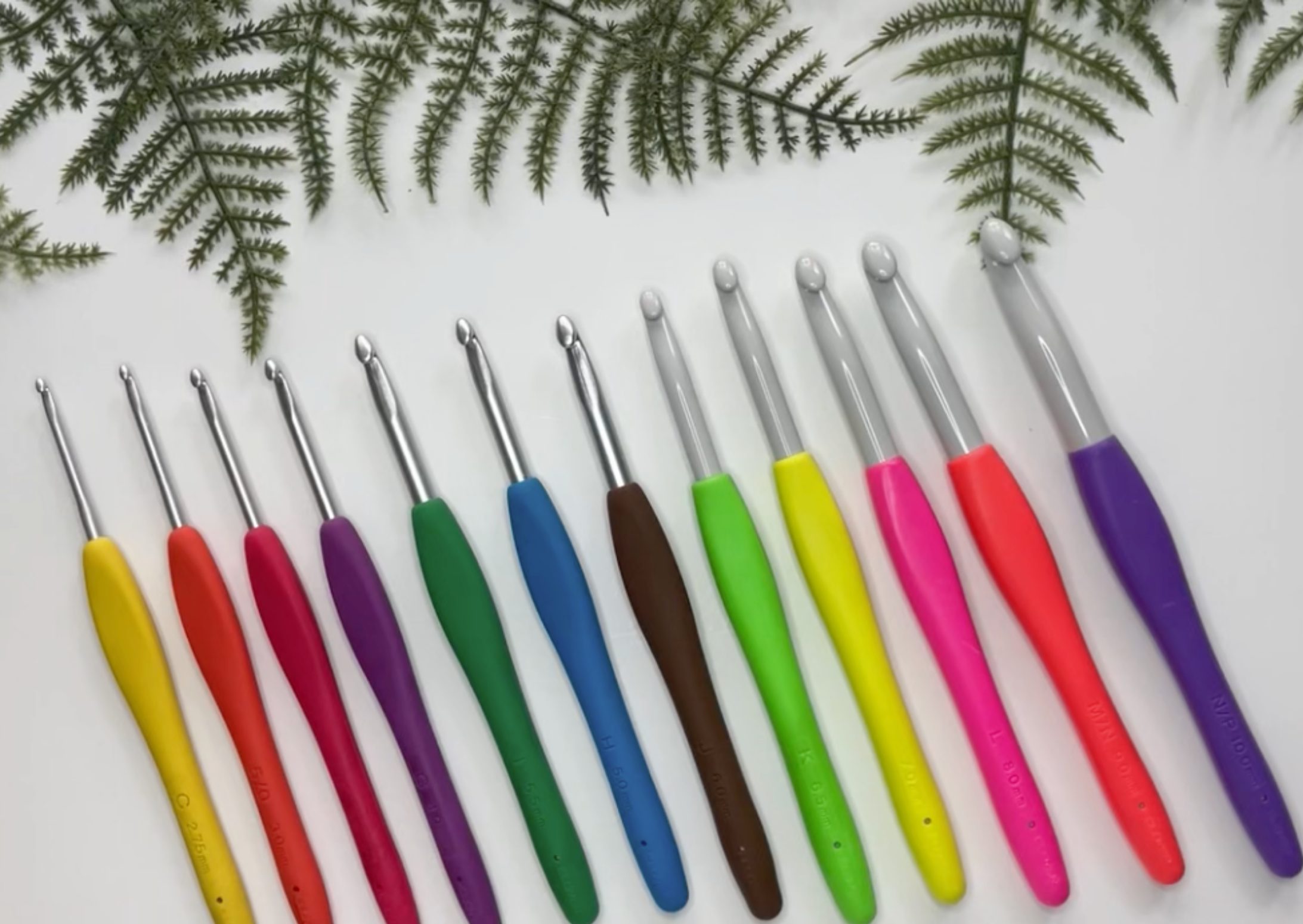
Crochet hooks come in dozens of different sizes, materials, and styles, so it’s no surprise that choosing your first hook can feel a little overwhelming. One hook has a letter, another has a number, and another only lists millimeters. Then there are aluminum hooks, bamboo hooks, ergonomic hooks, and more! The good news? Choosing the right crochet hook sizes for beginners is much simpler than it seems.
In this beginner-friendly guide, I’ll walk you through everything you need to know about crochet hook sizes, explain what all those numbers mean, show you how to match your hook to your yarn, and help you choose the best crochet hook for your very first project.
By the end of this lesson, you’ll feel confident picking up the right hook and be ready to start crocheting!
LEARN TO crochet
Module 1: Foundations First
Lesson 4: Crochet Hook Sizes & Types
This lesson is part of my free Learn to Crochet Course designed to take you from your very first stitch to completing your first projects and beyond.
24 step-by-step lessons with videos.
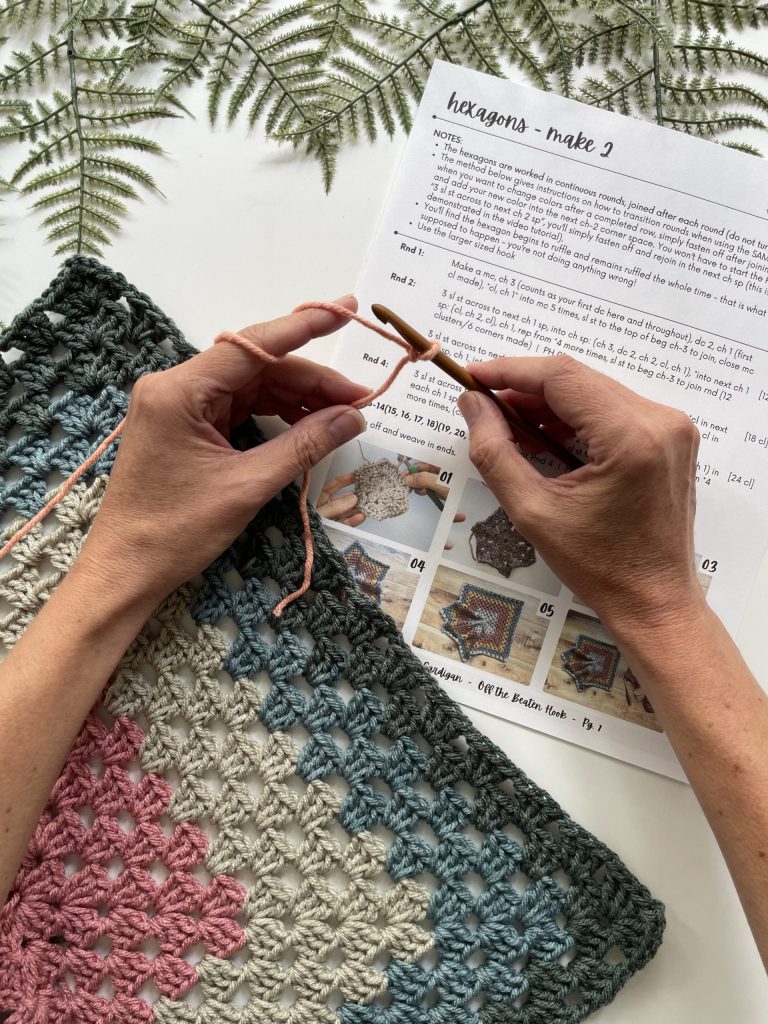

What is a Crochet Hook?
A crochet hook is the tool you’ll use to pull loops of yarn through one another to create crochet stitches. Unlike knitting, which uses two needles, crochet only requires a single hook.
Although crochet hooks come in many different sizes and materials, they all do the same basic job: helping you create smooth, even stitches.
The size of your crochet hook affects nearly every part of your finished project, including:
- Stitch size
- Fabric drape
- Overall project size
- Stitch definition
- How quickly your project works up
That’s why choosing the right hook is just as important as choosing the right yarn when it comes to crochet hook sizes for beginners.
If you’ve already read my previous lesson on Crochet Yarn for Beginners, you know that most yarn labels recommend a hook size. In this article all about crochet hook sizes for beginners, you’ll learn exactly what those recommendations mean and how to confidently choose the best hook for your project.
A Little Help for Your Crochet Basket
Join and get the free Crochet Pro Essentials PDF Pack, plus gentle course reminders and new lessons in your inbox. This PDF pack includes a hook size to yarn weight matching guide which will come in super handy as you learn about crochet hook sizes for beginners!
Anatomy of a Crochet Hook

Before we dive into hook sizes, it’s helpful to know the basic parts of a crochet hook. You don’t need to memorize all of these terms, but understanding them will make it easier to follow patterns, tutorials, and future lessons.
Hook (Includes the Tip and Mouth)
The hook is the curved tip and mouth that catches your yarn and pulls it through loops to form stitches. This is the part that gives the crochet hook its name.
Throat
Just behind the hook is the throat. This area guides the yarn as you pull it through each stitch. Different hook styles have slightly different throat shapes, which we’ll talk about later in this guide.
Shaft
The shaft is the smooth section where your stitches rest while you’re working. The diameter of the shaft determines the size of your stitches, which is why crochet hooks are measured here.
Thumb Rest (or Grip)
Many crochet hooks have a flattened section where your thumb naturally rests while crocheting. This gives you better control and makes the hook more comfortable to hold.
Some ergonomic hooks have larger cushioned handles designed to reduce hand fatigue during long crochet sessions.
Handle
The handle is the end of the crochet hook that you hold while working. Depending on the style of hook, it may be straight, rounded, or ergonomically shaped.
Don’t worry too much about choosing the “perfect” handle right away. As you crochet more, you’ll naturally discover what feels most comfortable in your hands.
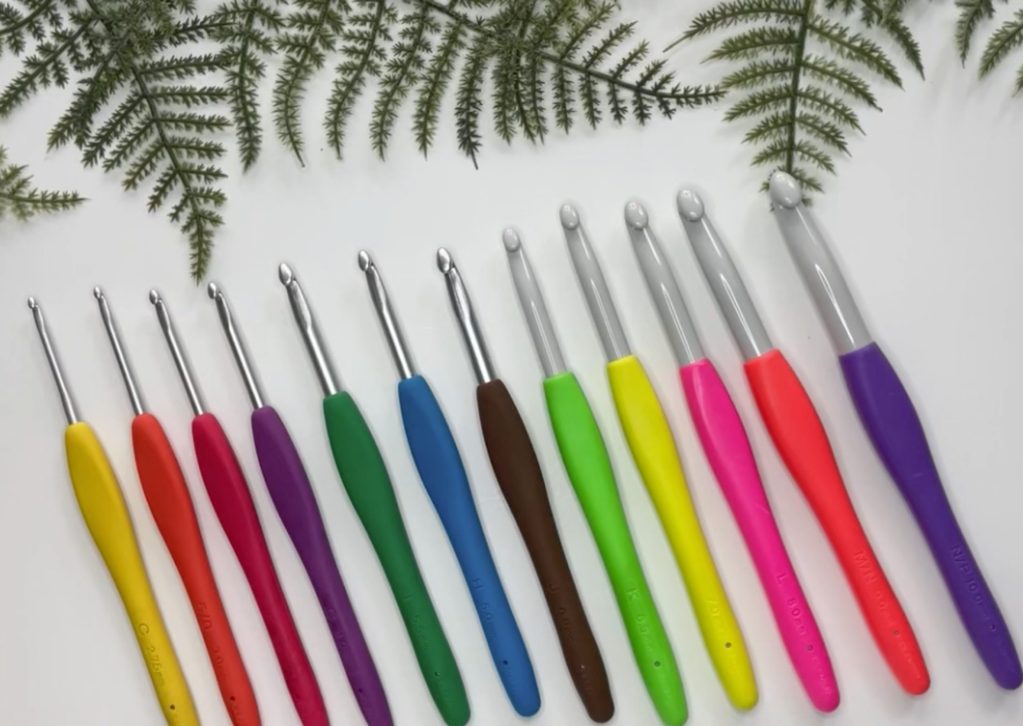
Crochet Hook Sizes Explained
One of the biggest questions beginners have is:
“What do all these letters and numbers mean?”
Thankfully, understanding crochet hook sizes for beginners is actually pretty straightforward once you understand the basics.
Crochet hooks are measured by the diameter of their shaft. A larger diameter creates larger stitches, while a smaller diameter creates smaller stitches.
Today, most crochet hooks list their size in millimeters (mm), which is the most accurate and universal way to measure hook sizes. However, some hooks—especially those sold in the United States—also include a letter or number size, such as H/8 or G/6.
For example:
- 4.00 mm = G/6
- 5.00 mm = H/8
- 5.50 mm = I/9
- 6.00 mm = J/10
If you ever notice differences between brands, trust the millimeter measurement rather than the letter. When I’m teaching about crochet hook sizes for beginners, I always emphasize this. Millimeters are standardized, while letter sizing can vary slightly between manufacturers.

Crochet Hook Size Chart
To decode crochet hook sizing, I created a Crochet Hook Sizes Conversion Chart of the different crochet hook sizes you’ll see. You can download and print it for free here. This size chart will make understanding crochet hook sizes for beginners a lot easier and more visual.
Which Crochet Hook Size Should Beginners Use?
If you’re only buying one crochet hook to get started, I recommend choosing a 5.5 mm (I/9) hook.
There’s a reason this size appears in so many beginner crochet kits and patterns—it strikes the perfect balance between comfort, visibility, and versatility.
A 5.5 mm hook:
- Works beautifully with worsted weight (#4) yarn
- Creates stitches that are easy to see and count
- Is comfortable to hold for long periods
- Works well for scarves, dishcloths, blankets, hats, and many other beginner projects
Can I Start with Another Size?
Absolutely!
While a 5.5 mm hook is my top recommendation, you can also choose a 5 mm (H/8) or a 6 mm (J/10) which both work well with worsted weight yarn as well.
The most important thing isn’t buying every hook size right away—it’s learning how different hook sizes affect your stitches. As your skills grow, you’ll naturally add more sizes to your collection.
For now, one quality 5.5 mm hook is all you need to when trying to choose the right crochet hook sizes for beginners.
Watch the Video Lesson
Crochet Hook Materials Explained
Once you’ve chosen the right crochet hook size, you’ll notice something else: crochet hooks come in a variety of materials. Aluminum, plastic, bamboo, wood…does it really matter which one you use?
The short answer is yes—especially when you’re first learning.
Every material has its own feel, and as you gain experience, you’ll likely discover a personal favorite. For now, let’s take a look at the most common options so you know what to expect.

Aluminum Crochet Hooks ⭐
If you’re buying your very first crochet hook, I recommend starting with an aluminum hook.
Aluminum hooks are smooth, lightweight, affordable, and easy to find in craft stores. Because the surface is so smooth, yarn glides easily across the hook, making it easier to create consistent stitches.
Plastic Crochet Hooks
Plastic crochet hooks are another inexpensive option and are often sold in beginner sets. They’re extremely lightweight and are commonly used for larger hook sizes that would be heavy if made from metal. In smaller sizes (especially 3 mm and under), plastic hooks can flex slightly making them a little more frustrating to use with tight stitches.
Wooden and Bamboo Crochet Hooks
Wooden and bamboo crochet hooks have a warm, natural feel that many crocheters love.
Unlike aluminum, wood creates a little more friction, which helps slow the yarn down as it moves across the hook. Some crocheters find this gives them better control, especially when working with slippery fibers. And while they can be beautiful, wood and bamboo hooks would be my very last recommendation to start with.
What About Ergonomic Crochet Hooks?
You may also come across ergonomic crochet hooks, which have larger, cushioned handles designed to fit more comfortably in your hand.
These hooks can help reduce hand fatigue and are especially popular among crocheters who work on projects for long periods or experience hand or wrist discomfort.
If you find that your hands become tired quickly or you simply prefer the feel of a thicker handle, an ergonomic crochet hook can be a wonderful investment. Many crocheters eventually switch to ergonomic hooks because they find them more comfortable for everyday use.
Which Crochet Hook Material Is Best?
There’s no single “best” crochet hook material—it really comes down to personal preference.
That said, if you’re just getting started, I recommend a 5.5 mm aluminum crochet hook paired with a worsted weight (#4) yarn. It’s an affordable combination that’s easy to find and works well for countless beginner projects.
As your crochet journey continues, you’ll naturally discover which materials feel most comfortable in your hands.
Inline Hooks vs. Tapered Hooks
Have you ever looked at two crochet hooks that are the same size but noticed they don’t quite look alike? You’re not imagining things!
At the risk of introducing a little more of an “advanced” topic here, I’d like to quickly mention the difference between Inline hooks and Tapered hooks. And the reason I’m doing it now is simply this… I wish I had known about this sooner! It would have saved me so much grief struggling with a hook type that just didn’t work for me. So from personal experience, when it comes to learning about crochet hook sizes for beginners, I feel like this topic is critical right from the start.
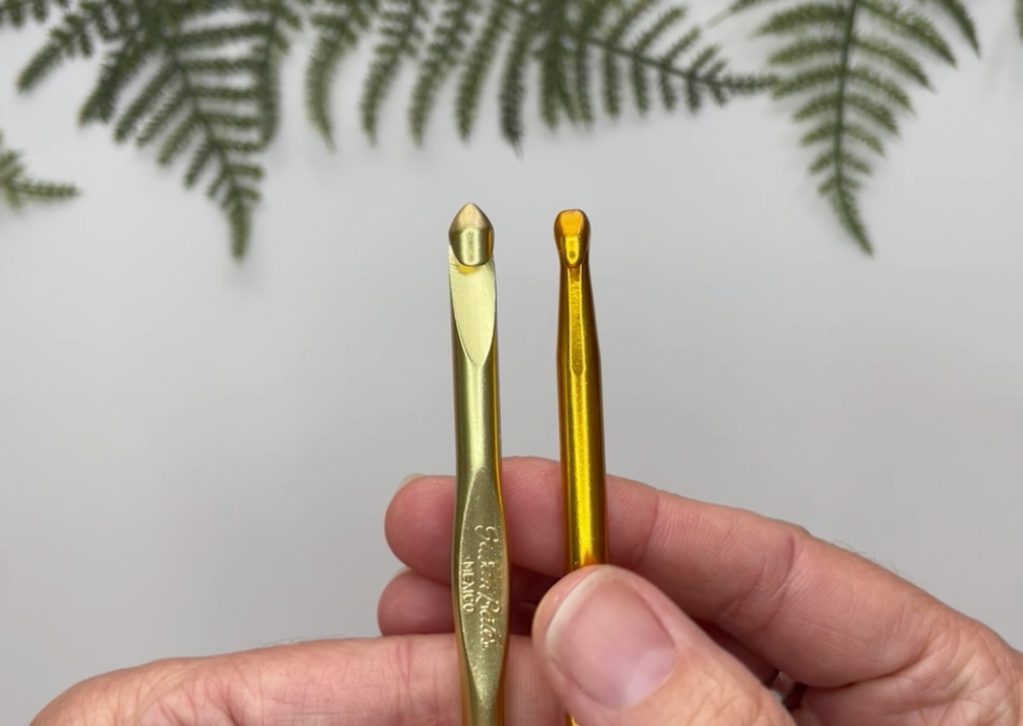
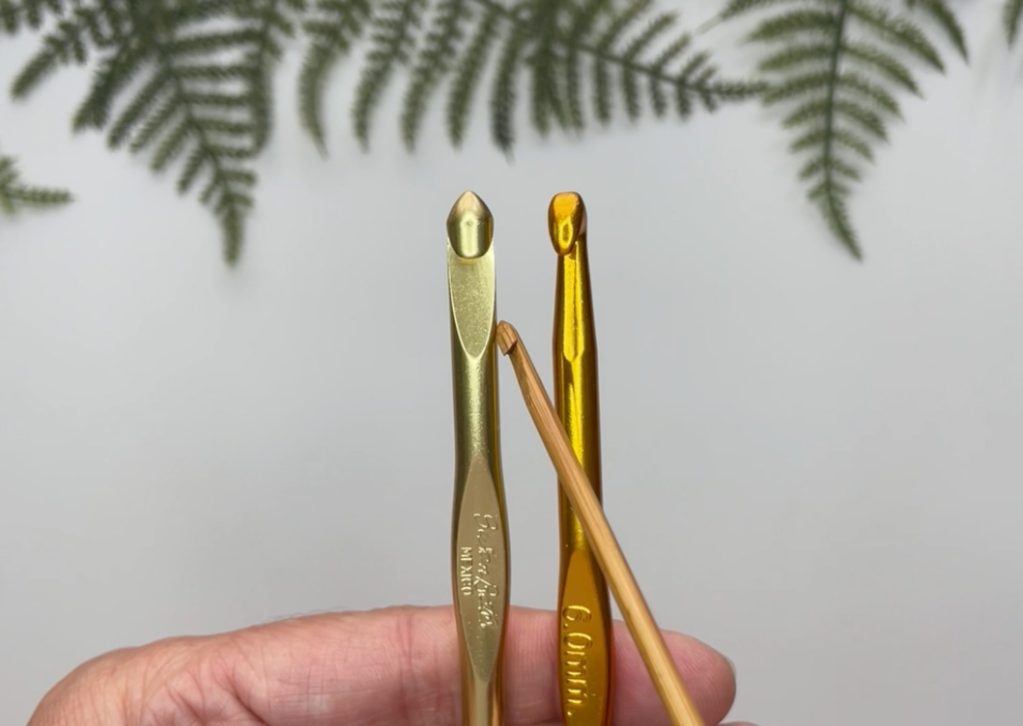
Crochet hooks are made in one of two styles: inline or tapered. Both create beautiful stitches, and neither is “better” than the other. They simply have a different shape and feel.
Inline Crochet Hooks
Inline hooks have a straighter shaft with a deeper hook and a throat that’s more square in shape. The head and the shaft are the same width all the way down the hook. They have a more defined tip and they are common with brands like Susan Bates.
Because of this design, many crocheters find that inline hooks create very even, consistent stitches.

Tapered Crochet Hooks
Tapered hooks have a rounded head and throat that gradually narrows toward the hook. This style is common in brands like Boye. Many crocheters feel that tapered hooks slide through stitches more smoothly, making them feel quick and fluid to use. Some beginners find they move more easily through yarn (and honestly, I agree).
Which Style Is Better?
The truth is…neither!
This is one of those crochet topics where personal preference matters much more than right or wrong.
Some crocheters swear by inline hooks, while others won’t use anything except tapered hooks (like me!). Both styles can produce beautiful, professional-looking projects.
If you have the opportunity, try one of each style and see which feels more comfortable in your hand.
Don’t worry if you can’t tell the difference right away. Many beginners happily crochet for years before they even realize there are two different hook styles!

How Crochet Hook Size Affects Your Project
Crochet hook size has a much bigger impact on your finished project than many beginners realize.
Even if you use the exact same yarn, changing your hook size will completely change the look and feel of your crochet fabric.
A Smaller Hook Creates:
- Smaller stitches
- Tighter fabric
- More defined stitch detail
- Firmer finished projects
- Less drape
Smaller hooks are often used for projects like amigurumi, where you want the stuffing to stay hidden.
A Larger Hook Creates:
- Larger stitches
- Looser fabric
- More drape
- Softer finished projects
- Faster progress because each stitch is larger
Larger hooks are often used for lightweight shawls, blankets, and projects where you want the fabric to feel soft and airy.
What Happens If You Use the Wrong Hook Size?
Using a different hook than your pattern recommends doesn’t necessarily mean you’ve done something wrong—but it can change the outcome of your project.
A hook that’s too small may create a stiff fabric and a project that’s smaller than intended.
A hook that’s too large may create loose stitches, gaps, or a finished project that’s larger than expected.
That’s why most crochet patterns recommend a specific hook size and include a gauge measurement to help you check your results.

How to Match Your Crochet Hook to Your Yarn
One of the easiest ways to choose a crochet hook is to start with your yarn.
Most yarn labels include a recommended hook size, giving you an excellent starting point for your project.
Keep in mind, though, that this recommendation isn’t a strict rule. It’s simply the manufacturer’s suggestion based on the yarn’s thickness.
Many crochet patterns intentionally use a different hook size to achieve a specific look or feel. For example, an amigurumi pattern may call for a smaller hook to create tighter stitches, while a lacy shawl might use a larger hook for more drape.
When you’re deciding which hook to use, I recommend following this simple order:
- Follow your crochet pattern if you’re using one.
- Check your yarn label if the pattern doesn’t specify a hook size.
- Make a gauge swatch if the finished size of your project is important.
As you gain experience, choosing the right hook size will become second nature.

Common Beginner Crochet Hook Mistakes
Every crocheter makes mistakes when they’re learning—and choosing the wrong crochet hook is one of the most common. The good news is that these mistakes are easy to avoid once you know what to look for.
Here are a few beginner pitfalls and how to avoid them.
Buying Every Hook Size Right Away
When you first walk into a craft store, it’s tempting to think you need a complete set of crochet hooks before you can get started.
You don’t!
In fact, I recommend beginning with just one quality 5.5 mm aluminum crochet hook. This size works with many beginner-friendly patterns and pairs perfectly with worsted weight (#4) yarn.
As you crochet more projects, you’ll naturally add new hook sizes to your collection.
Ignoring the Recommended Hook Size
Every crochet pattern includes a recommended hook size for a reason. While it’s okay to experiment as you become more experienced, beginners will usually have the best results by following the pattern’s recommendation.
Likewise, the hook size printed on your yarn label is a great starting point if you’re creating your own project.
Focusing on Letters Instead of Millimeters
You may notice that crochet hooks are labeled with letters, numbers, or millimeters.
While letter sizes are common in the United States, the millimeter (mm) measurement is the most accurate and universal sizing system.
When in doubt, match the millimeter size listed in your pattern.
Choosing a Hook That’s Uncomfortable
Crochet is meant to be enjoyable! If your hook feels awkward or uncomfortable in your hand, don’t assume you’re doing something wrong.
Everyone has different preferences when it comes to hook materials, handle styles, and grip shapes. As you gain experience, you’ll discover which hooks feel best for you.
Thinking There’s One “Perfect” Crochet Hook
One of the biggest misconceptions beginners have is believing they need to find the one perfect crochet hook.
The truth is, every crocheter develops their own preferences over time.
Some love aluminum hooks. Others prefer bamboo. Some swear by inline hooks, while others crochet exclusively with tapered hooks.
The best crochet hook is the one that feels comfortable in your hands and helps you enjoy the process.
Don’t be afraid to experiment as your skills grow!
Crochet Hook Sizes & Types FAQs
A
A 5 mm, 5.5 mm or 6 mm crochet hook are the best choices for beginners. They’re easy to hold, work well with worsted weight (#4) yarn, and are commonly used in beginner crochet patterns.
P
Q
I recommend starting with an aluminum crochet hook. Aluminum hooks are smooth, affordable, durable, and allow yarn to glide easily, making them an excellent choice for new crocheters. If you’re buying your very first crochet hook, I recommend starting with either a standard aluminum hook or an ergonomic hook with an aluminum tip.
Not necessarily.
Very large hooks can feel bulky and awkward, while very small hooks require more precision.
Using a different hook size than your pattern recommends can change the size, texture, and drape of your finished project.
A smaller hook creates tighter stitches and a firmer fabric, while a larger hook creates looser stitches and a softer, more open fabric.
It’s usually best to start with the recommended hook size, especially if you’re a beginner.
As you become more experienced, you may choose to size up or down to achieve a different look or to match the pattern’s gauge.
Not when you’re first starting.
Many inexpensive aluminum hooks work beautifully and are perfect for learning. As you crochet more, you may decide to invest in ergonomic or premium hooks based on your personal preferences.
Inline hooks have a straighter shaft and deeper hook, while tapered hooks have a more rounded shape that many crocheters find glides smoothly through stitches.
Neither style is better—it’s simply a matter of personal preference.
Start by checking your crochet pattern. If you’re not using a pattern, look at the recommended hook size on the yarn label. It’s a great starting point and will help you create balanced, even stitches.
Final Thoughts
Choosing your first crochet hook doesn’t have to be complicated.
Once you understand how hook sizes work, recognize the different materials and styles, and know how to match your hook to your yarn, you’ll have everything you need to start crocheting with confidence.
Remember, you don’t need an entire collection of crochet hooks to begin. One quality 5.5 mm aluminum hook and a skein of worsted weight yarn are enough to start learning and creating beautiful projects.
As your skills grow, so will your hook collection—but for now, keep it simple, enjoy the process, and don’t be afraid to experiment.
Every experienced crocheter started exactly where you are today.
You now know more about hooks than you ever thought you needed to!
Now that you’ve chosen the right crochet hook, it’s time to learn how to hold it!
In the next lesson, I’ll show you how to hold your crochet hook and yarn and we’ll get practicing with our chain stitches! You’ll begin to discover which hook hold feels the most natural and comfortable for you.
We’ll also talk about hand positioning, reducing fatigue, and simple tips to help you crochet comfortably from the very beginning.
← Previous Lesson: Crochet Yarn for Beginners
SOCIAL MEDIA YOUR THING?
Connect with me on your favorite social network!
Pin This Lesson for Later
Leave a Reply